Private informationNo public listing createdYou decide whether to proceed
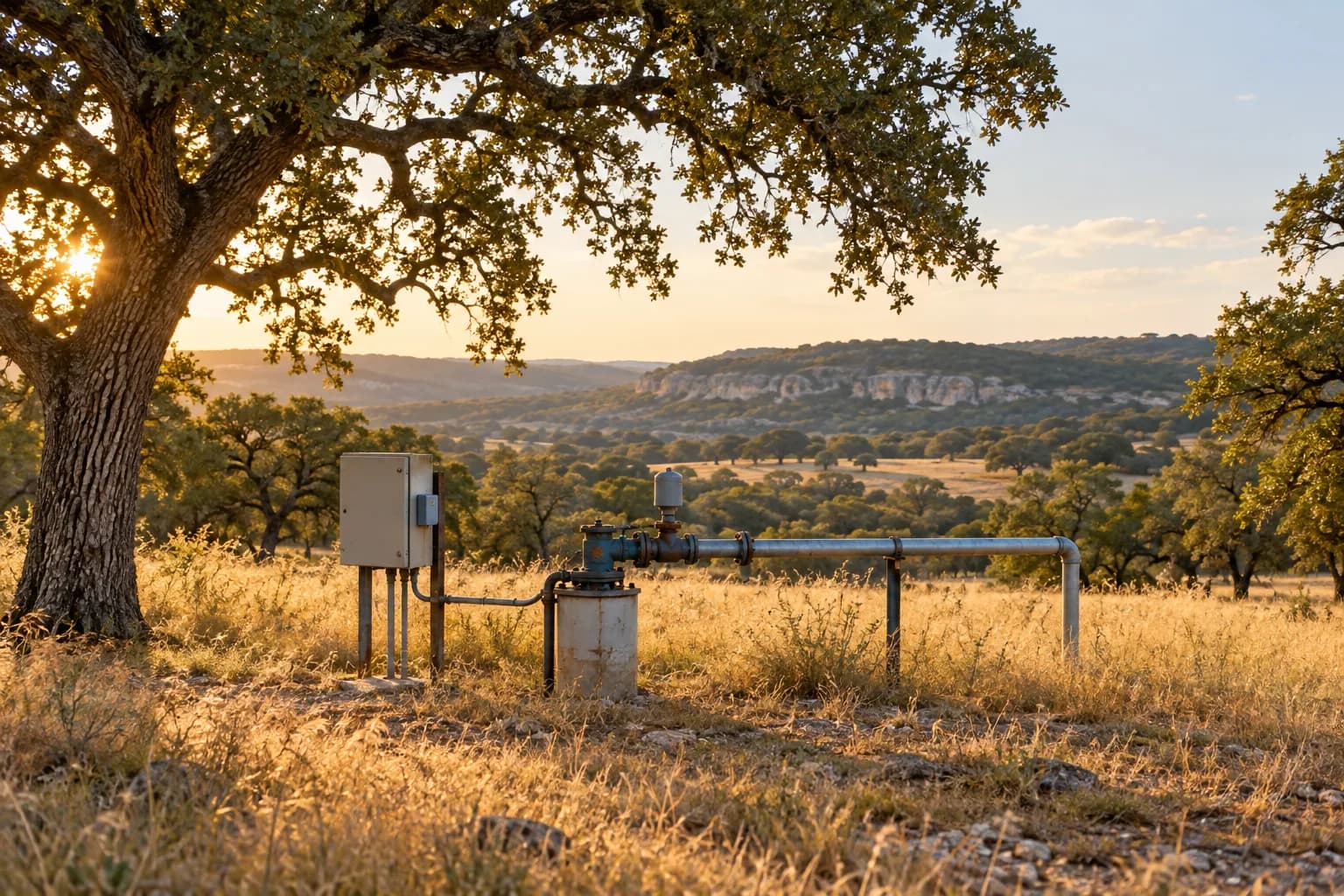
Illustrative Texas well sceneCONNECT · PROVE · DELIVER
A clear path, at your pace.
You do not need all the answers to begin. Each step helps clarify what is known and what needs a closer look.
01CONNECT
Start with what you know.
Tell us about your well, water rights, or land. We bring your information together with public records to understand what may be worth exploring.
You share
Location, available records, and what you hope to do.
We help
Organize a private profile and identify the next questions.
02PROVE
Build confidence in the water.
If there is a promising opportunity, we help identify the evidence needed—from well capacity and water quality to rights and local requirements.
You share
Well reports, permits, test results, and access for agreed field work.
We help
Plan the next checks and coordinate the right specialists.
03DELIVER
Consider the right opportunity.
When the evidence supports a match, we help connect the conversation with qualified water users and the partners needed to move it forward.
You choose
Whether to explore a sale, lease, or another arrangement.
We help
Evaluate the path with commercial, legal, and development partners.
VALUE BEFORE A BUYER APPEARS
A clearer picture of what you have.
A profile brings scattered records and local knowledge into one place. It helps us see what is ready, what is missing, and whether further work makes sense.
A private water profile
Relevant well, aquifer, and county context
A clear list of evidence gaps
Next steps for evaluating an opportunity
YOUR PROPERTY. YOUR DECISION.
Start a conversation, not a commitment.
Submitting information does not create a public listing or commit you to sell. Your exact property location, identity, and documents stay out of the public map. We discuss any next steps with you before moving forward.
Four areas of work help turn what you know into evidence a water user can evaluate.
01
Confirm ownership and rights
We establish who controls the property or water interest, then review the rights and legal constraints with water counsel.
02
Understand the water
We look at well records and aquifer conditions, then use flow and quality testing to understand what the resource can reliably provide.
03
Establish the regulatory path
We assess groundwater jurisdiction, permitting obligations, production limits, and any restrictions on moving water off the property—then define a viable path for the intended use.
04
Plan a workable delivery
We evaluate treatment, transmission, timing, and economics, then bring the evidence together for a qualified buyer to review.
A profile or reported yield alone does not verify a resource. We agree on the next steps with you.
START WITH WHAT YOU KNOW
You bring the local knowledge. We help connect the pieces.
Have a well, water rights, or land you want to understand better?